
Temple Hopping
Posted by on Feb 23, 2026
Andrew’s note:
Sophie actually wrote this a long time ago, but I lost it at the bottom of an email, so it’s my fault.
I spent a week in Thailand during my semester studying abroad. The focus of the trip was world religions, so we went to a LOT of temples. Bangkok is a city full of temples - many were constructed to celebrate a new king’s reign, and they strove to outdo each other. Returning to Bangkok, we skipped a couple of the most famous temples (I had already seen them and Andrew hates crowds). We did see my favorite, but even I regretted it a little. I remember it being busy in 2017, but it was absolutely packed now. For 5300 baht (~$170), you can rent traditional Thai garments and have a full hour-long photoshoot. People seemed annoyed when I interrupted their picture session to…walk around the temple…. It is still one of my favorite religious sites. It sits right on the river, with a beautifully tied central prang (a type of spire). The temple - Wat Arun - is translated as Temple of Dawn in English and gets its name from the Hindu god Aruna. Unlike many other temples that are quite obviously Buddhist, Wat Arun is a beautiful blend of Indian, Chinese, Khmer influences with both Hindu and Buddhist symbolism. The colorful tiles seem to be made of small porcelain plates, creating a dizzying mosaic.
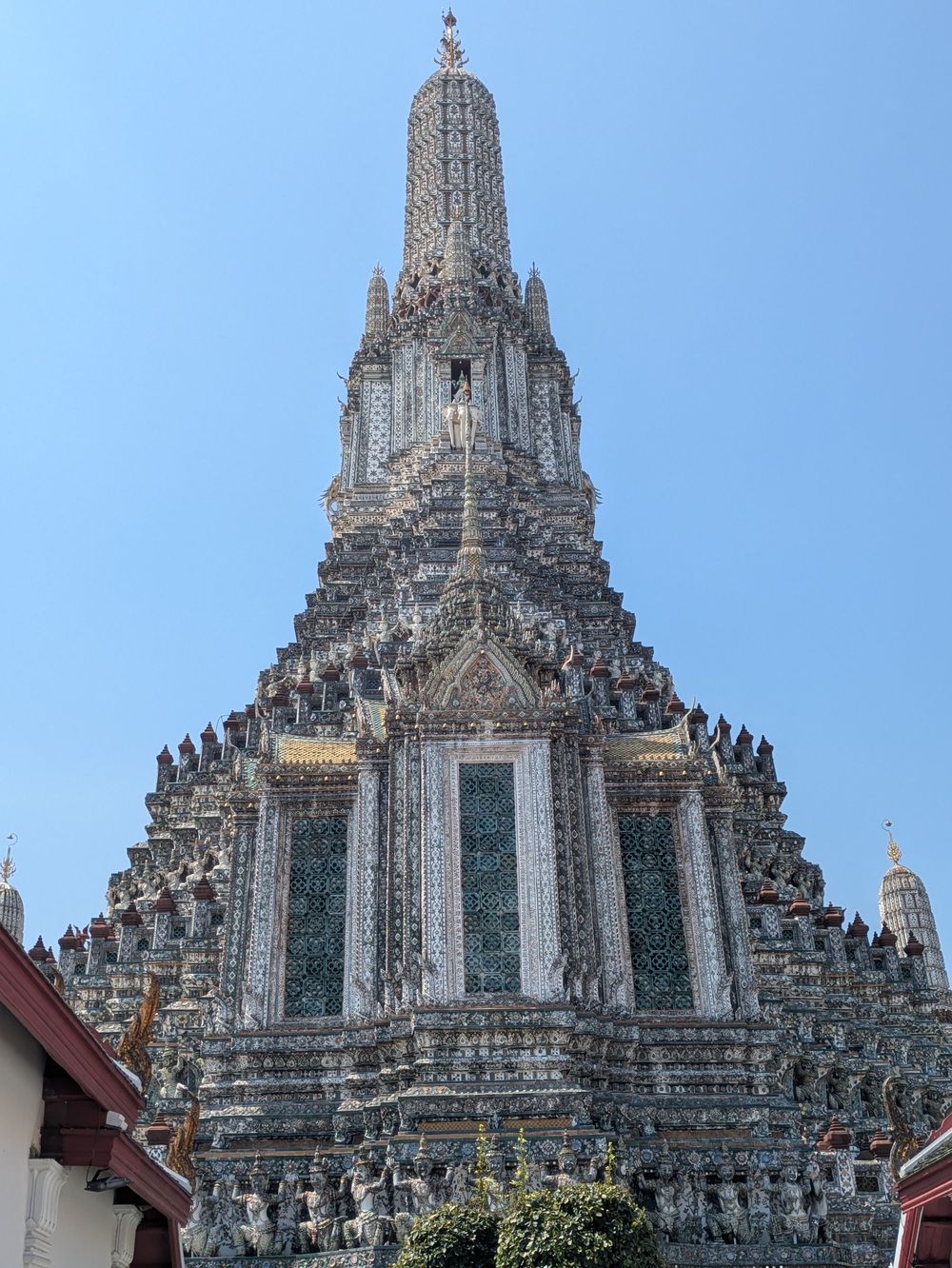
Entering Wat Arun.
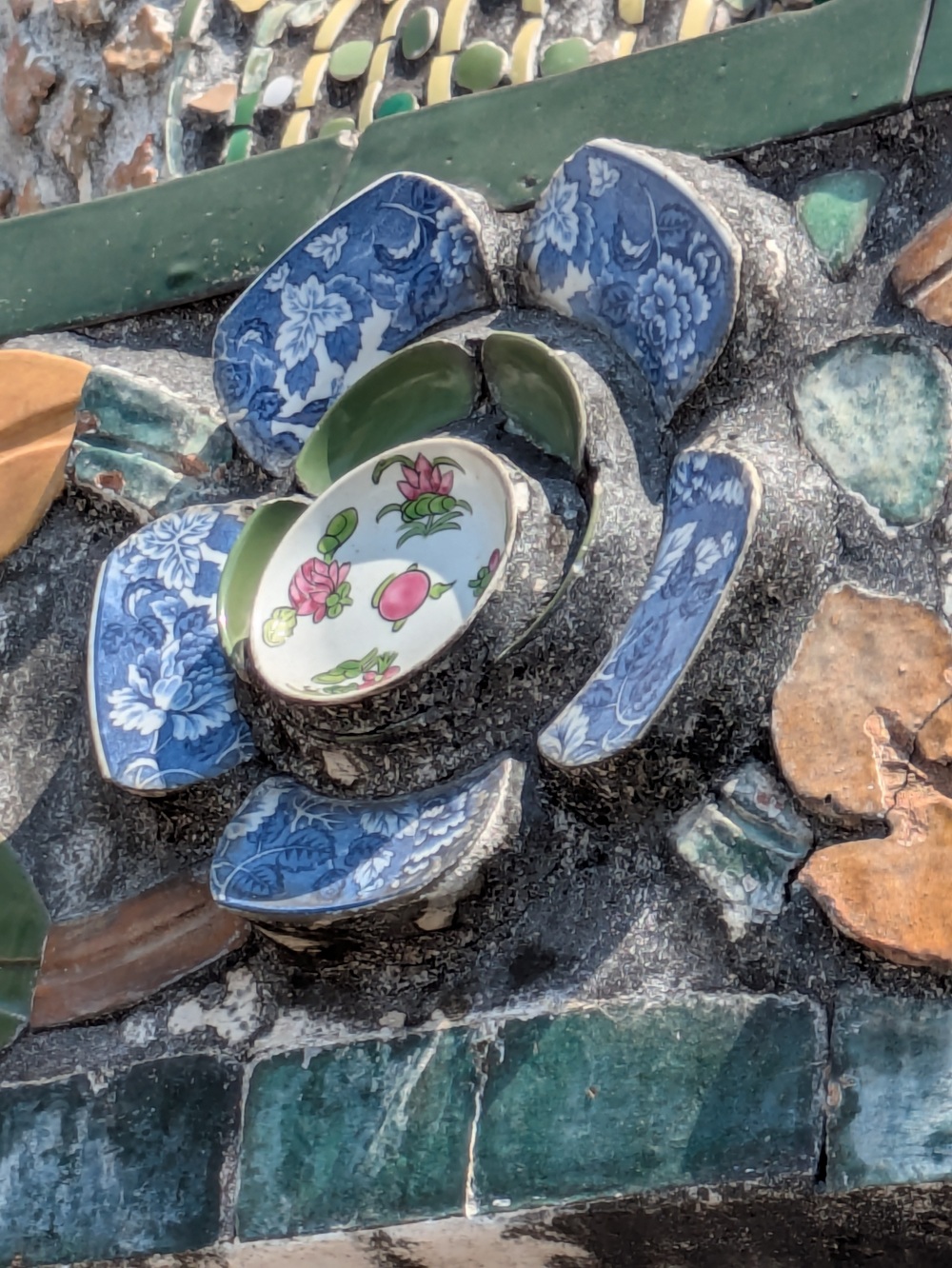
Wat Arun’s close up.
It was worth it to see it again, despite the crowds. Barely.
We also did a day trip to Ayutthaya Historical Park, a UNESCO site with over 400 temples. The Park covers the ruins of Ayutthaya, the second capital of the Siamese Kingdom (later Thailand) that was founded in 1350. The city was attacked by the Burmese in the mid 18th century, who burned the city to the ground. What remains is an archaeological dream - monumental towers and monasteries, in various states of preservation. We ended up seeing five sites each with unique and eclectic styles, drawing from Ayutthaya’s trading partners - China, India, Persia, Europe, and more. Ayutthaya was one of the world’s largest cities of its time and an economic, political, and religious center. It connected maritime routes between Europe and China due to its location in the Bay of Bengal. You can see the results of being an economic powerhouse in its temples.
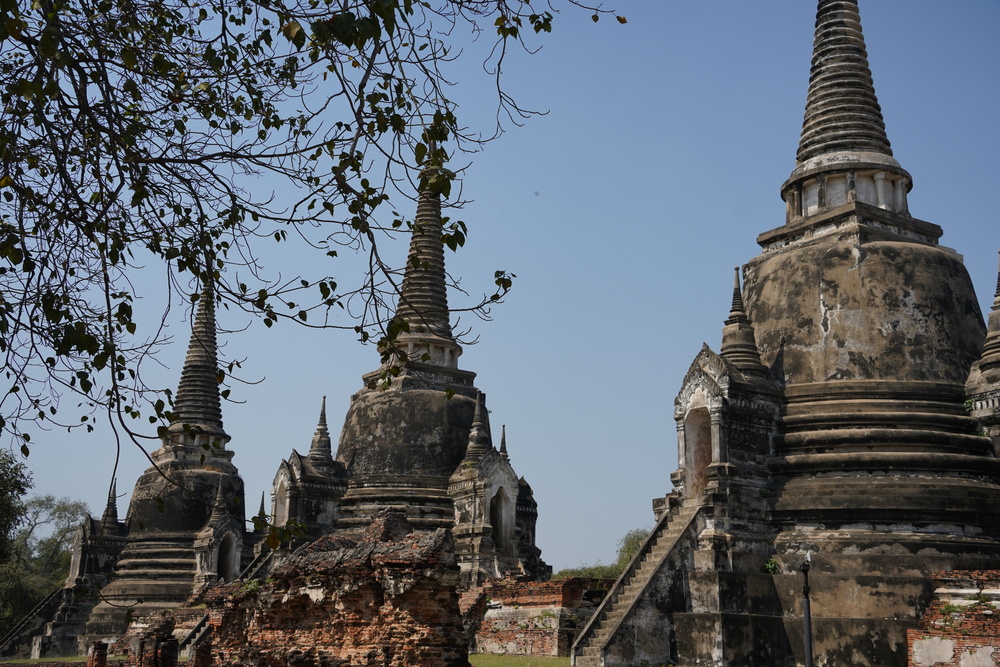
Some of the temples in Ayutthaya.
Our last temple (we also saw a 32m Golden Buddha which was great) was a find from Andrew. We went right after Wat Arun and it was the perfect antidote to my overstimulation. Despite being one of the most visually stunning temples I have ever seen, there were only a handful of tourists. We enjoyed leisurely strolling around the comparatively newer (1860s) and immaculately maintained temple. The Supreme Patriarch (head monk) of Thailand is the abbot there, and it has special importance to the royal family as the final resting place of several kings. The gold leaf, even more sumptuous than the more famous Bangkok temples, was complemented by blue mirrors, yellow floral designs, and even more gold. We passed a quiet hour in the complex, taking pictures and sitting in the shade. Truly a hidden gem.
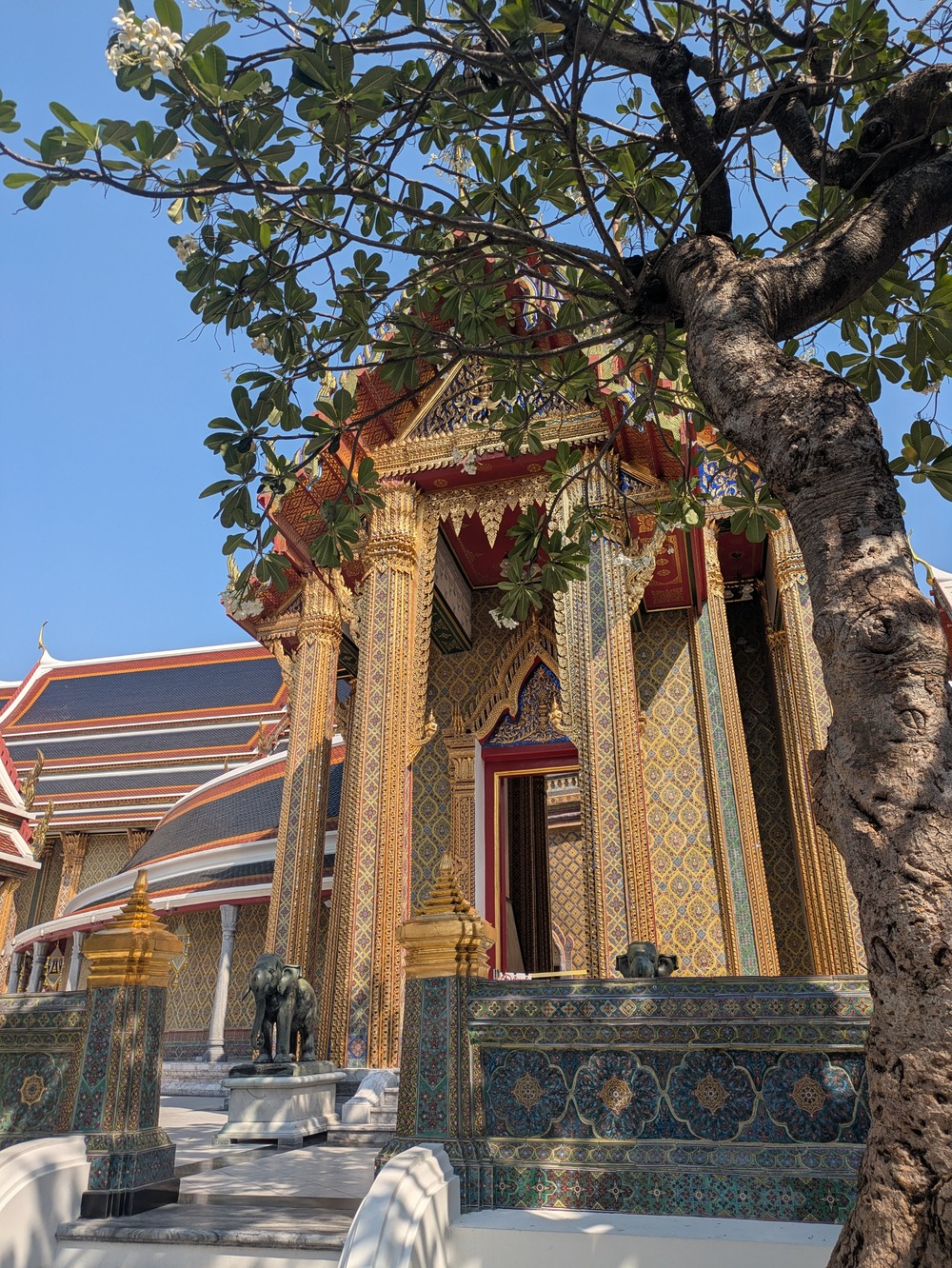
A temple that Sophie described as 'Other Temple' but it’s actual name is Wat Ratchabophit.