
Karst
Posted by Sophie on Feb 11, 2026
According to Wikipedia, a karst is a ‘topography formed by the dissolution of soluble carbonate rocks such as limestone and dolomite’. Karst comes from the German, specifically to describe a number of features found within the Dinaric Alps. Karst may ultimately derive from the Proto-Indo-European root ‘karra’ -rock.
Southern Thailand is chock full of karst topography. Karst in Thailand is limestone, with internal drainage. Water sets in pools, dissolving limestone as it goes resulting in cracks and erosion. And boy, are they beautiful.
Tower karsts are tall rock structures that form as fractures continue to be eroded downward, carving up parts of previously connected rock masses. Many of the famous rock formations found in Thailand (particularly in Krabi and Phang Nga) are tower karsts.
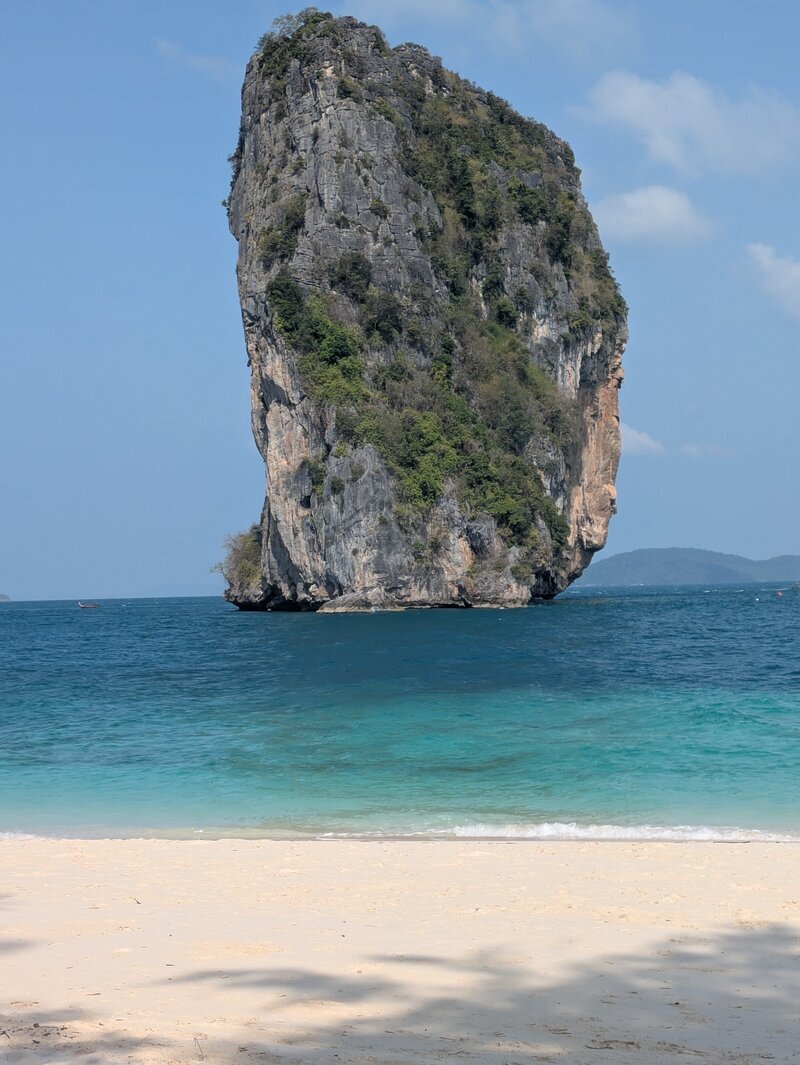
A karst visible from a beach on Ko Poda, Thailand.
Paired with the densely forested, intensely green jungle clinging to the sides of cliffs, the red clay and grey limestone is arresting. Sheer cliff faces extend from stunning white sand beaches, while little karst oasis seem to float in the turquoise water. So far, we have been surrounded by karst in Thailand, from Ao Nong, to Railay beach, to Koh Poda, and even Khao Sok National Park. Unlike its beach counterparts, the karsts in Khao Sok bears a strong resemblance to Yosemite in some areas. A little moodier, denser, with fabulous holes ranging from pinpricks to giant caverns. The karsts seem to be much more connected, seeming more like a true mountain range pinpricked with isolated towers.
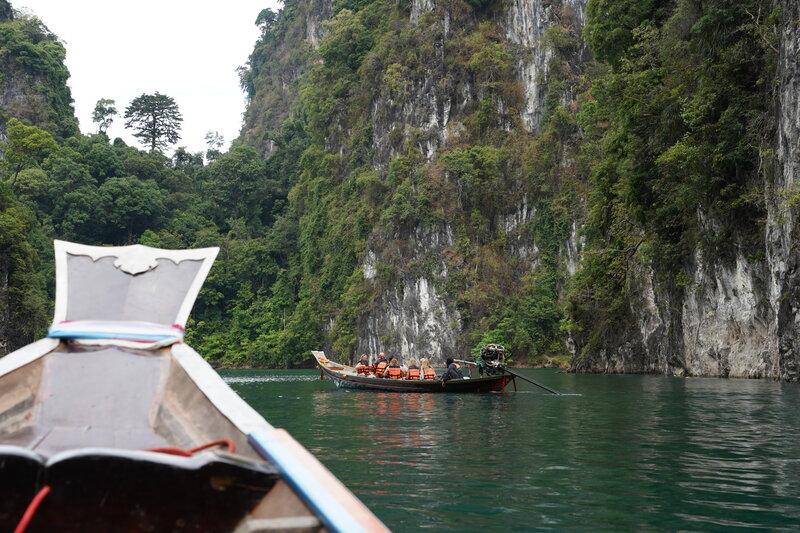
A karst in Khao Sok National Park in Thailand.
I’m excited to see more throughout Thailand, and very soon in Vietnam.